Grassroots 4 Change: Planting Ideas, Growing Change

Step 1: Get Informed
Before making changes, start by understanding what is being used on your lawn
Questions to ask your landscaper or garden center
• What fertilizers, herbicides, and pesticides are you applying?
• Can you list the active ingredients in each product?
• Are any of these chemicals linked to health or environmental risks?
• How long do these products stay on the grass or soil?
• When is it safe for children and pets to return to the lawn?
• Do any of these products wash into storm drains or waterways?
• Are there warning labels or safety sheets I can review?
What the answers mean (in simple terms)
• Active ingredients tell you what chemical is actually doing the work.
• Persistence means how long the chemical stays in the environment.
• Runoff risk shows whether it can reach local water like Manhasset Bay.
• Safety timing helps protect kids, pets, and pollinators.
Goal: Know what’s being used and how it may affect your family and community.

Step 2: Seek Safer Alternatives

Lower-toxicity options are available and effective
Questions to ask
• Do you offer organic or low-toxicity treatments?
• What non-chemical methods can reduce weeds or pests?
• How effective are these safer options compared to traditional chemicals?
• How often would they need to be applied?
• What is the cost difference, if any?
• Can we try a test area first?
What the answers mean
• Organic/low-toxicity products reduce exposure risks.
• Non-chemical methods (soil health, mowing height, overseeding) prevent problems naturally.
• Effectiveness may be similar—but sometimes takes more patience.
• Cost is often comparable over time because healthier soil needs fewer treatments.
Goal: Discover practical choices that reduce harm without sacrificing results.
Step 3: Create a Balanced Plan
You don’t need to switch overnight. Small, thoughtful steps can make a big difference!
Questions to guide your plan
• Which high-risk chemicals could we eliminate first?
• Can we switch to safer products for routine treatments?
• Where could we allow natural lawn areas or fewer applications?
• What plan fits our budget, time, and comfort level?
• How will we measure progress over the season?
What a balanced plan might look like
• Use safer or organic treatments for regular care.
• Reserve stronger chemicals only for serious problems, if ever needed.
• Improve soil health, watering, and mowing to prevent issues naturally.
• Reduce applications near play areas, pets, and waterways.
Remember:
Even partial changes can significantly reduce toxic runoff and exposure.
Goal: Create a realistic path toward a healthier lawn—and a healthier community.
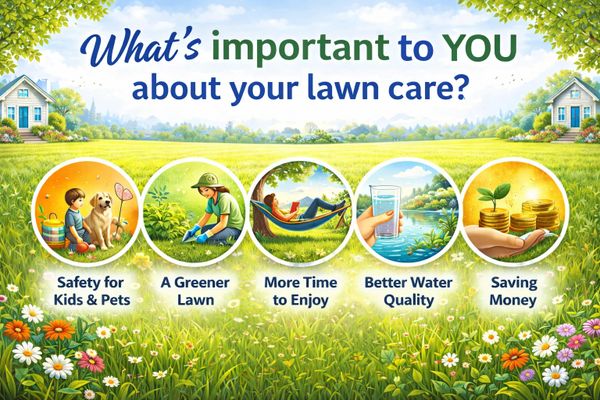
Your Lawn. Your Voice
Help us understand your lawn care priorities. Take our anonymous survey.